All products

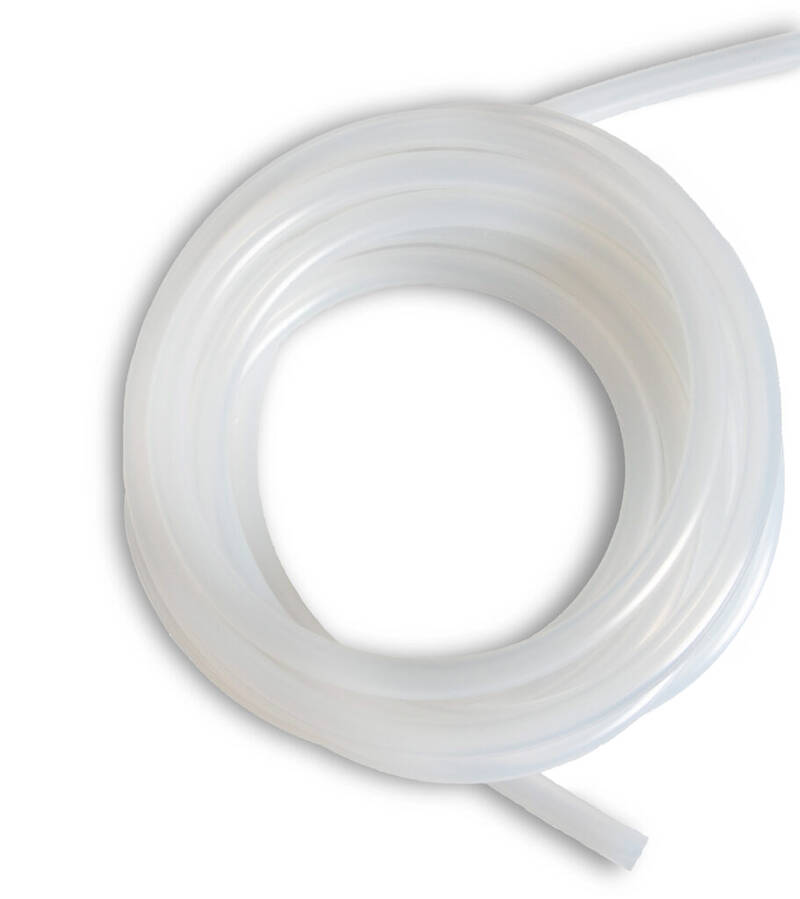
Save up to 23% CO2 emissions with sustainable EcoFlex TPE tubing

EcoFlex offers a more sustainable product with a reduction of CO2 emissions up to 23% compared to standard TPE tubing, with no changes to fit, function, and specifications

Learn more about EcoFlex

What makes EcoFlex tubing more sustainable than alternatives?

During the EcoFlex production process, fossil oil is replaced with bio-based oil using the mass balance principle. At the same time, EcoFlex, like other AdvantaPure products, is produced using renewable energy. Because the mass balance process requires no changes to form, function, specifications, or production processes, the quality remains the same while the environmental impact is demonstrably lower.

Additionally, TPE offers intrinsic sustainability advantages over other materials, such as lower energy consumption during production and the possibility of mechanical recycling, making EcoFlex a future-proof and more sustainable choice for single-use applications.

Standard TPE tubing vs. AdvantaFlex vs. EcoFlex

Why choose thermoplastic elastomer (TPE) tubing?

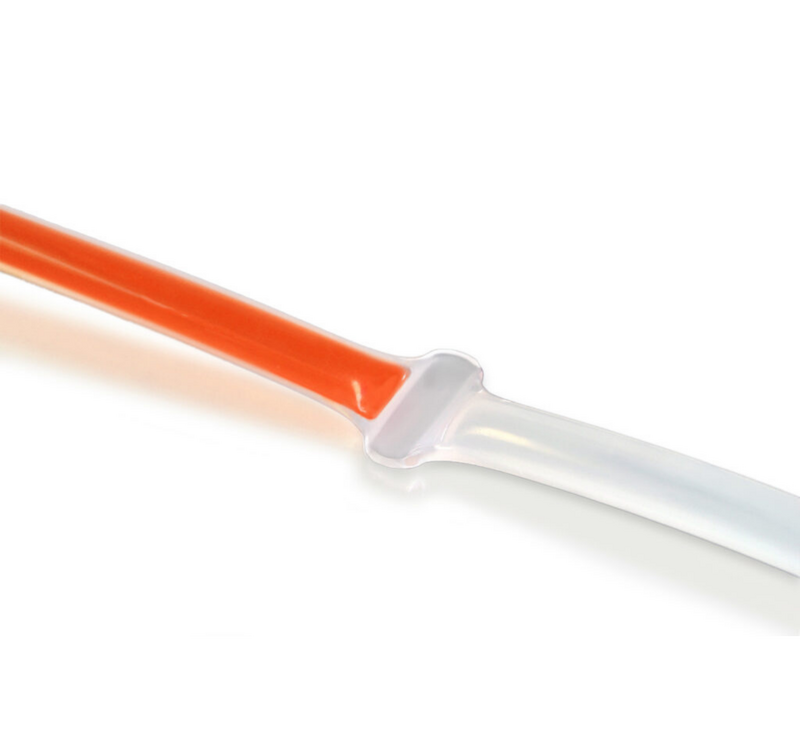
TPEs are a family of polymer products consisting of a plastic part and a rubber part. This gives them flexibility comparable to silicone, but like other plastics, they can still be melt-processed. Because the tubing can melt, TPE tubing can be sealed or welded and also mechanically recycled. Moreover, TPE is generally more chemically resistant than silicone and less absorbent and permeable to liquids and gases.

Discover EcoFlex

Frequently asked questions (FAQ) about EcoFlex tubing

  • Do we need to redo our processes or validation when switching from AdvantaFlex to EcoFlex?

    No, switching to EcoFlex does not require requalification or changes in validation.

    EcoFlex is based on the same proven formulation as AdvantaFlex and has no changes in form, fit, function, production process, or product specifications. Compliance and regulatory testing also remain identical, so no change control or additional validation is required when switching.

  • How exactly are the CO2 reductions calculated?

    The calculations are based on 1 foot (30.48 cm) of tubing and are based on the life cycle assessment (LCA) methodology.

    The 10% CO? reduction of AdvantaFlex compared to standard TPE tubing is achieved by using renewable energy instead of fossil fuels during production. An additional 15% CO? reduction was achieved in the production of EcoFlex compared to AdvantaFlex, thanks to the use of bio-based oil instead of fossil fuels.

  • Does the bio-based oil affect chemical resistance, permeability, or absorption?

    No, the bio-based oil does not affect performance or material properties.

    The mass balance principle ensures that the chemical composition of the final product remains identical to that of AdvantaFlex. This fully preserves chemical resistance, low permeability, low absorption, and mechanical properties.

  • What does the switch to EcoFlex mean for the availability of different sizes?

    EcoFlex is available in all the same lengths and diameters as AdvantaFlex.

    Coiled tubing lengths range up to 100 feet (~30m), and coiled tubing lengths range up to 500 feet (~150m). The inside diameter ranges from 0.125” (3.18mm) to 1” (25.4mm) and the outside diameter ranges from 0.25” (6.35mm) to 1.375” (34.93mm).

Want to know more about EcoFlex for your specific process?

I'm happy to help. Ask your question using the form below. I'll get back to you as soon as possible. Prefer to contact me directly? You can call me at +31 (0)6-83503872.