


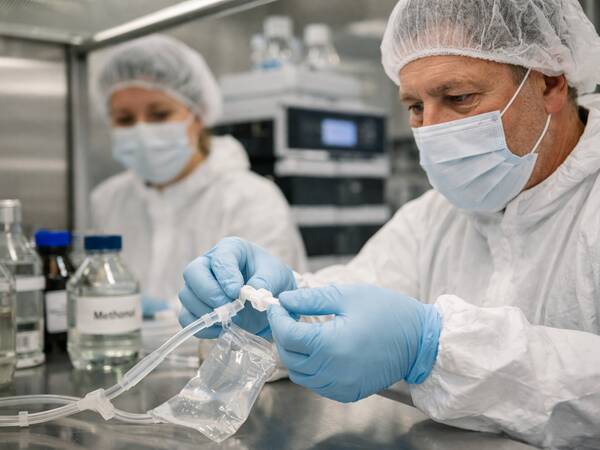
I work with single-use technology on a daily basis and see firsthand how regulatory requirements continue to shape our industry. More and more, I receive questions about changes in regulations such as USP <665> and Annex 1. In this article, I dive deeper into what these two regulations entail and how single-use technology can help you to make your process compliant.
What does USP <665> entail?
USP <665> primarily introduces changes in the way polymers and single-use components are qualified. While extractables and leachables (E&L) have been well-established topics for years, the new chapter calls for greater structure and standardization. It emphasizes a risk-based approach: not every component needs to undergo the same testing package, but the rationale must be clearly documented. This means that end users and suppliers share responsibility for providing transparent data and ensuring full traceability.
What does Annex 1 entail?
At the same time, Annex 1, the European GMP guideline for sterile manufacturing, continues to set a high standard. Its strong focus on contamination control and the implementation of a well-designed Contamination Control Strategy (CCS) makes single-use solutions increasingly attractive. Not merely as a flexible alternative, but as an important tool for maintaining sterility and product quality.
What stands out to me is that both regulatory frameworks are moving in the same direction: more risk assessment, more comprehensive documentation, and above all, greater collaboration throughout the supply chain.
Podcast: Understanding USP 665 & Annex 1
Recently, I was a guest on the podcast of our supplier CPC, where we discussed how single-use assemblies can, and should, go hand in hand with regulatory compliance. By reducing contamination risks, enabling improved material control, and supporting robust documentation, single-use technologies can actively contribute to compliance with critical regulatory requirements. The podcast episode highlighted that regulation does not have to be a constraint or obstacle, but that it can drive the development of safer and more robust processes.
In the coming years, regulations such as USP <665> and Annex 1 will continue to drive change while also creating opportunities to further advance single-use technology. I am interested to see what innovative solutions await. Do you want to discuss how single-use technology can help you be compliant with existing and future regulations? Feel free to reach out.