


How the compounding pharmacy of the Albert Schweitzer Hospital saves time and eliminates risks with plug-and-play filling assemblies
Almost every hospital has a department that works with parenteral medications, often called the compounding pharmacy. These medications, such as morphine, are received in large volumes and subsequently filled into syringes so that they can be administered to patients. This process takes place in a cleanroom because the risk of contamination must be kept to a minimum.
Albert Schweitzer Hospital's challenge
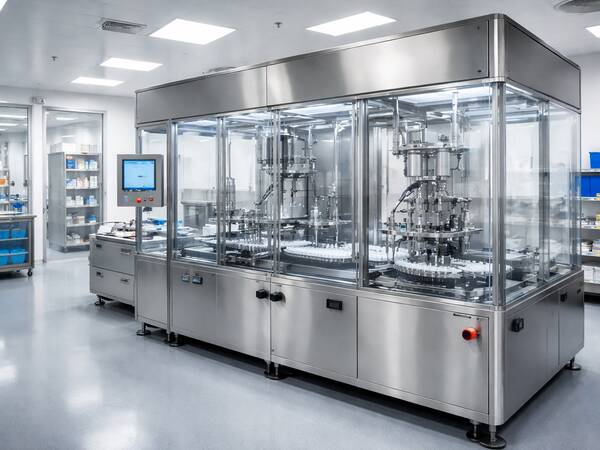
One of our clients with such a compounding pharmacy is the Albert Schweitzer Hospital, where they work with a Groningen filling machine. When filling syringes, a special filling assembly is required that minimizes the risks of contamination and leakage. This assembly must be manufactured precisely with the correct connectors and tubing lengths and diameters. Furthermore, the components used in the assembly must be free of animal materials, and the assembly must be gamma-irradiated and meet USP VI requirements. Like many other hospitals, the Albert Schweitzer Hospital chose to have the filling assemblies delivered by Hitma ready-to-use and gamma-irradiated.
What does the plug-and-play assembly yield for the hospital?
Having all filling assemblies assembled results in significant time savings compared to assembling the assemblies in-house. Especially when hundreds of syringes need to be filled weekly. Time is precious in healthcare, where staff shortages are common and attention to the patient is crucial.
Moreover, the strict quality control of our assembly partner UltraPure International ensures that the risk of handling errors is minimized. The assemblies are produced by trained cleanroom operators, and every assembly is thoroughly inspected upon leaving the cleanroom. This eliminates the chance of human error that could occur during assembly in the hospital, which could, for example, cause fluid to back up and syringes not to be filled to the correct volume. Naturally, this problem is mitigated by the hospital weighing whether the volume is correct throughout the entire execution procedure, but an excessive deviation in volume does result in the syringes potentially needing to be refilled.
We strive to incorporate the same components into the filling assemblies at all hospitals wherever possible. This allows us to keep these components in stock, thereby guaranteeing supply reliability and shortening delivery times.
Prototype to test the filling assembly
The Albert Schweitzer Hospital wanted to test the filling assembly before officially putting it into use. To this end, we produced a prototype of the assembly. Subsequently, together with a filling machine operator, I entered the hospital's cleanroom to monitor the entire installation process and check whether any problems or risks occurred during the installation. The installation proceeded flawlessly, and the results of a number of tests as well as the final volumes in the syringes corresponded exactly to the desired specifications.
By outsourcing the assembly of filling assemblies, the Albert Schweitzer Hospital opted for time efficiency while simultaneously further safeguarding the quality and safety of the preparation process. Curious about what ready-made assemblies can mean for your hospital? I would be happy to discuss this with you.